A Guide to FIFA Ultimate Team: Building the Perfect Squad on a Budget
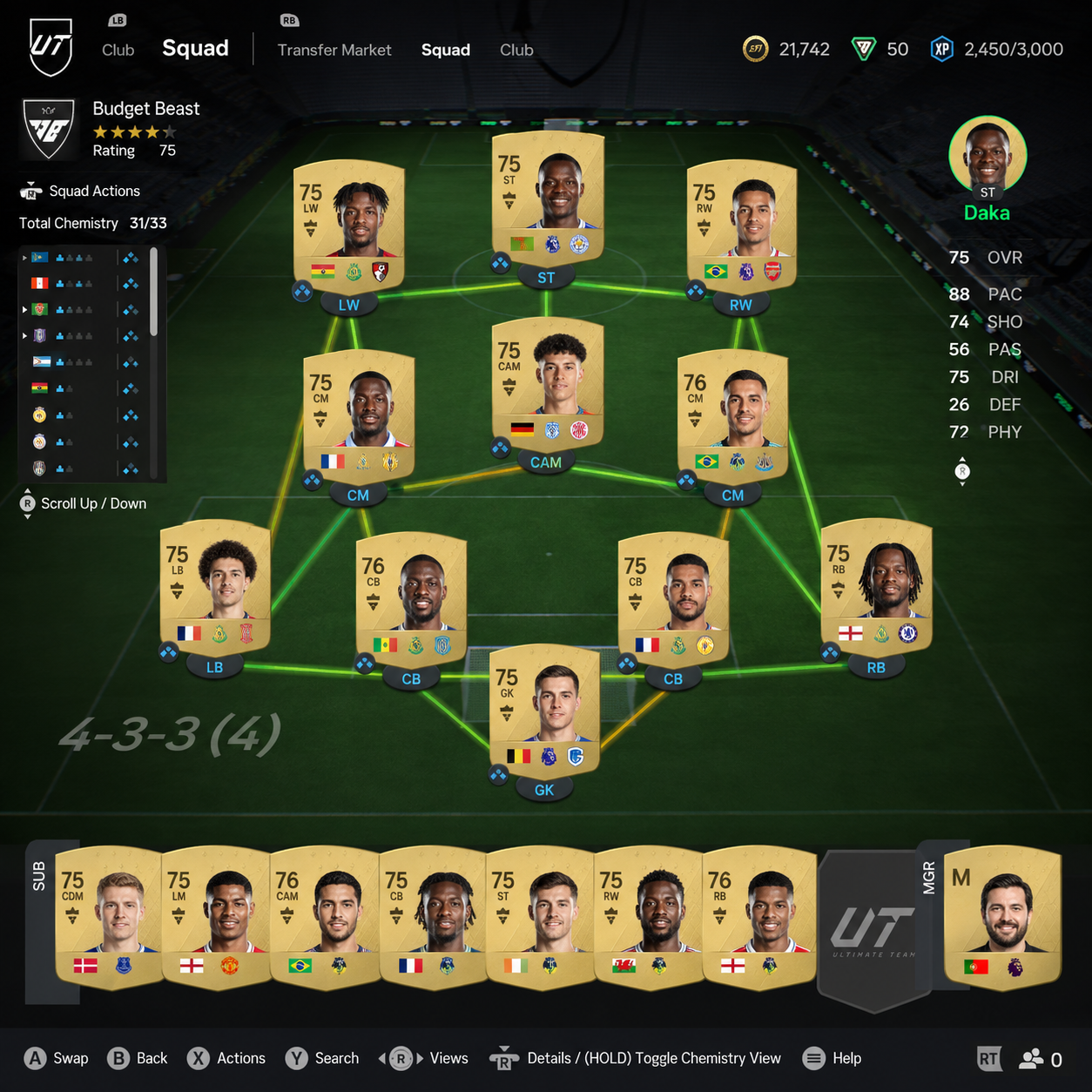
Building a strong FIFA Ultimate Team squad does not require the most expensive cards in the game. A limited balance of FUT Coins can still produce a competitive team when you prioritize chemistry, useful attributes, suitable formations, and players who fit clear roles. The goal is to create a side that performs well together, then improve it through smart purchases and free rewards.
Set a Budget and Define Your Squad-Building Goals
Set a spending limit before buying players, then build around your most important weaknesses. A sensible budget protects enough FUT Coins for a complete starting XI, substitutes, contracts or other consumables when needed, and one or two planned upgrades.
Begin by deciding what you want from the squad. A team for casual matches can tolerate more experimentation, while a squad intended for Rivals, Champions, or competitive esports play needs reliable pace, defensive recovery, stamina, and role balance. Do not spend every coin on one famous attacker before filling the rest of the team.
A practical budget split
- 60–70%: starting XI, with priority given to central positions and players you use constantly.
- 10–15%: substitutes and a reserve goalkeeper or utility player.
- 10–20%: future upgrades, chemistry fixes, or a market opportunity.
- 5–10%: consumables and small squad-management costs.
These percentages are flexible. If you already own several usable cards, invest more in one weak area. A useful checkpoint is simple: after each purchase, ask whether the player improves your starting XI immediately or solves a chemistry problem. If the answer is no, keep the coins.
Start with Formation, Chemistry, and Player Roles
Choose the formation and player roles before purchasing individual cards. A balanced system with strong squad chemistry usually outperforms a collection of higher-rated players who do not suit the team’s tactics.
Formations shape how your players receive the ball, defend space, and create passing options. A 4-3-3 can provide width and natural winger positions, while a 4-2-3-1 offers extra protection through two defensive midfielders. A 4-4-2 is straightforward for beginners because it creates two central forward options and clear defensive lines.
Next, select a chemistry foundation. Linking players through the same league, nation, or club makes it easier to reach useful chemistry levels. You do not need every player from one competition, but avoid building around disconnected cards that force expensive solutions later. Check the chemistry screen before confirming a purchase.
Player roles matter just as much as positions. One central midfielder may need defensive awareness and stamina, while another should progress the ball and support attacks. Your full-backs must match your approach: attacking full-backs need pace and stamina, whereas conservative ones should offer defensive positioning and strength.
Use chemistry styles to refine a player rather than hide a fundamental weakness. A style can improve relevant attributes, but it cannot turn an unsuitable defender into a dependable defensive midfielder. Squad chemistry, roles, and tactics should solve the main problem first.
Spend Coins Wisely on the Transfer Market
Use the Transfer Market to buy functional attributes at a reasonable cost, not simply the highest player ratings. Compare several cards in the same position and judge their in-game profile, chemistry fit, and expected usefulness.
Overall ratings can be misleading. For an attacker, acceleration, finishing, ball control, and weak-foot reliability may matter more than a few points of rating. For a centre-back, defensive awareness, pace, strength, reactions, and body type can influence performance more than a high passing statistic.
- Compare at least three similar players before buying.
- Check whether the card fits your formation and chemistry links.
- Consider stamina for midfielders, wingers, and attacking full-backs.
- Avoid paying a premium for a popular name if a similar profile costs less.
- Review the market more than once; prices change with supply, rewards, promotions, and player demand.
Set a maximum price before searching. This prevents emotional bidding and helps you distinguish value from hype. A card may be excellent, but if it consumes one-third of your budget and improves only one position, it could delay three more useful upgrades.
For general background on the game series and its modes, the EA Sports FC overview on Wikipedia provides useful context, although current prices and gameplay conditions always change during the game cycle.
Find Affordable Players for Every Position
Affordable players should be selected for role-specific attributes, chemistry links, and consistency rather than reputation alone. A balanced budget squad needs dependable contributions across the pitch.
Attackers
Look for attackers with the right combination of acceleration, finishing, positioning, ball control, and stamina. A striker who fits your style may be more valuable than a faster card who loses possession easily. If you play crosses, heading and strength become more relevant; if you rely on quick combinations, passing and agility deserve greater attention.
Midfielders
A budget midfield should usually combine a ball-winner with a progressive passer. Defensive midfielders benefit from interceptions, defensive awareness, stamina, and strength. Creative midfielders need passing, dribbling, reactions, and enough pace to escape pressure. Avoid selecting three players who all perform the same job.
Defenders
Centre-backs need recovery pace, defensive awareness, reactions, and physical presence. Full-backs should match your instructions. If they overlap frequently, prioritize stamina and speed; if they stay back, defensive positioning and strength may offer better value.
Goalkeepers
Choose a goalkeeper who fits your defensive setup and offers reliable handling, reflexes, positioning, and height where relevant. Spending heavily on the goalkeeper is rarely the best first move when your defence allows frequent one-on-ones.
Improve the Squad Through Objectives and SBCs
Objectives and carefully chosen Squad-building challenges can improve a budget squad without relying entirely on the Transfer Market. Complete rewards that match your team’s needs, and treat every untradeable item as part of a longer-term plan.
Objectives can provide players, packs, coins, consumables, experience, and seasonal rewards. Prioritize tasks that overlap with matches you already intend to play. For example, an objective requiring assists with a particular league can be efficient if that league already supplies several starters. Rebuilding the entire team for a small reward often costs more time and coins than it returns.
SBCs exchange squads for rewards or special cards. They can be excellent value when you have untradeable duplicates, unused players, and a clear need for the final reward. They become poor value when you buy expensive players from the market simply to complete a speculative challenge.
Use a simple SBC test
- Does the reward enter your starting XI or provide a useful substitute?
- Can you complete most of the requirements with untradeable items?
- Would buying the reward directly, if possible, cost less than the SBC?
- Will the card remain useful after your next two planned upgrades?
Keep a small club inventory for future requirements, but do not hoard every low-rated card indefinitely. Convert genuinely surplus items into value only when the opportunity makes sense.
Upgrade Strategically as Your Budget Grows
Upgrade the position that costs you the most chances, goals, or defensive stability. The best improvement is often a weak link, not the most visible star in the squad.
Use a four-step upgrade cycle:
- Review performance: identify the player who repeatedly loses possession, misses chances, or leaves space.
- Diagnose the cause: decide whether the issue comes from attributes, chemistry, tactics, or your own instructions.
- Compare solutions: check affordable cards with similar chemistry links and compatible roles.
- Test before replacing again: play several matches and judge the card in your normal system.
Prioritize central defensive midfield, centre-back, striker, and goalkeeper upgrades when those positions directly affect match outcomes. However, the correct order depends on your results. If your striker scores consistently but your full-back is repeatedly exposed, upgrade the full-back first.
Keep chemistry issues on the upgrade list. A slightly lower-rated player at full chemistry may perform more reliably than a higher-rated replacement who disrupts multiple links. Reserve a portion of your FUT Coins so one purchase does not force you into a weaker bench or unfinished squad.
Common Budget Squad-Building Mistakes to Avoid
Avoiding a few costly habits preserves coins and produces a stronger team over time. Most beginner errors come from chasing ratings, hype, or isolated improvements instead of building a connected squad.
Overspending on one star player
The error: buying an expensive attacker before completing a balanced XI. Players make this choice because a headline card feels exciting and easy to evaluate. The consequence is a weak midfield or defence that gives away chances, reducing the star’s impact. The correction: finish a functional starting XI first, then spend on premium cards when the rest of the squad can support them.
Ignoring chemistry
The error: selecting cards solely because they have superior player ratings. The misconception is that rating automatically guarantees performance. Poor chemistry can weaken the team’s cohesion and force awkward positions or tactics. The correction: inspect squad chemistry before every purchase and build around reliable league, nation, or club links.
Chasing short-term market hype
The error: buying a popular card immediately after a promotion or viral gameplay recommendation. Demand can inflate prices, and the card may stop fitting your squad after a tactical change. The correction: wait when possible, compare alternatives, and buy for a specific role rather than social-media popularity.
Neglecting substitutes and squad depth
The error: spending the entire budget on eleven starters. Fatigue, suspensions, objectives, and tactical changes then leave you without practical replacements. The correction: maintain a small bench with pace, stamina, defensive coverage, and at least one player who can fill multiple positions.
Frequently Asked Questions About Budget FUT Squads
These answers provide quick rules for managing a limited FIFA Ultimate Team budget. Your exact choices should still reflect the current market, game cycle, formation, and cards already in your club.
How many coins should I save before building my first FUT squad?
Save enough for a complete starting XI and a basic bench while keeping a reserve for chemistry fixes and future upgrades. The exact number changes constantly, so use squad completeness and role balance as your benchmark instead of a permanent coin target.
Is chemistry more important than player rating?
In many situations, chemistry and role suitability matter more than a small rating difference. A well-linked player with useful attributes can outperform a higher-rated card that lacks chemistry or does not suit your formation.
Which positions should I upgrade first?
Upgrade the position that creates the largest recurring problem. Usually this means a striker who cannot finish, a centre-back who cannot recover, or a midfielder who cannot protect the defence, but your match results should determine the order.
Are SBCs worth completing on a limited budget?
SBCs are worthwhile when the reward improves your squad and you can complete most requirements with club items. Avoid challenges that require large market purchases for a reward you would not use regularly.
How can I avoid wasting coins on the Transfer Market?
Compare multiple players, set a maximum price, check chemistry links, and wait before buying heavily hyped cards when possible. Spend coins to solve a documented squad weakness, then test the improvement before making another purchase.
A budget FIFA Ultimate Team squad becomes competitive through deliberate choices: define the plan, build chemistry, buy functional attributes, use objectives and SBCs intelligently, and upgrade the weakest link first. The market and available cards will change, but that decision-making process remains useful throughout the game cycle.