Legendary Football Players of the 21st Century: Careers and Achievements
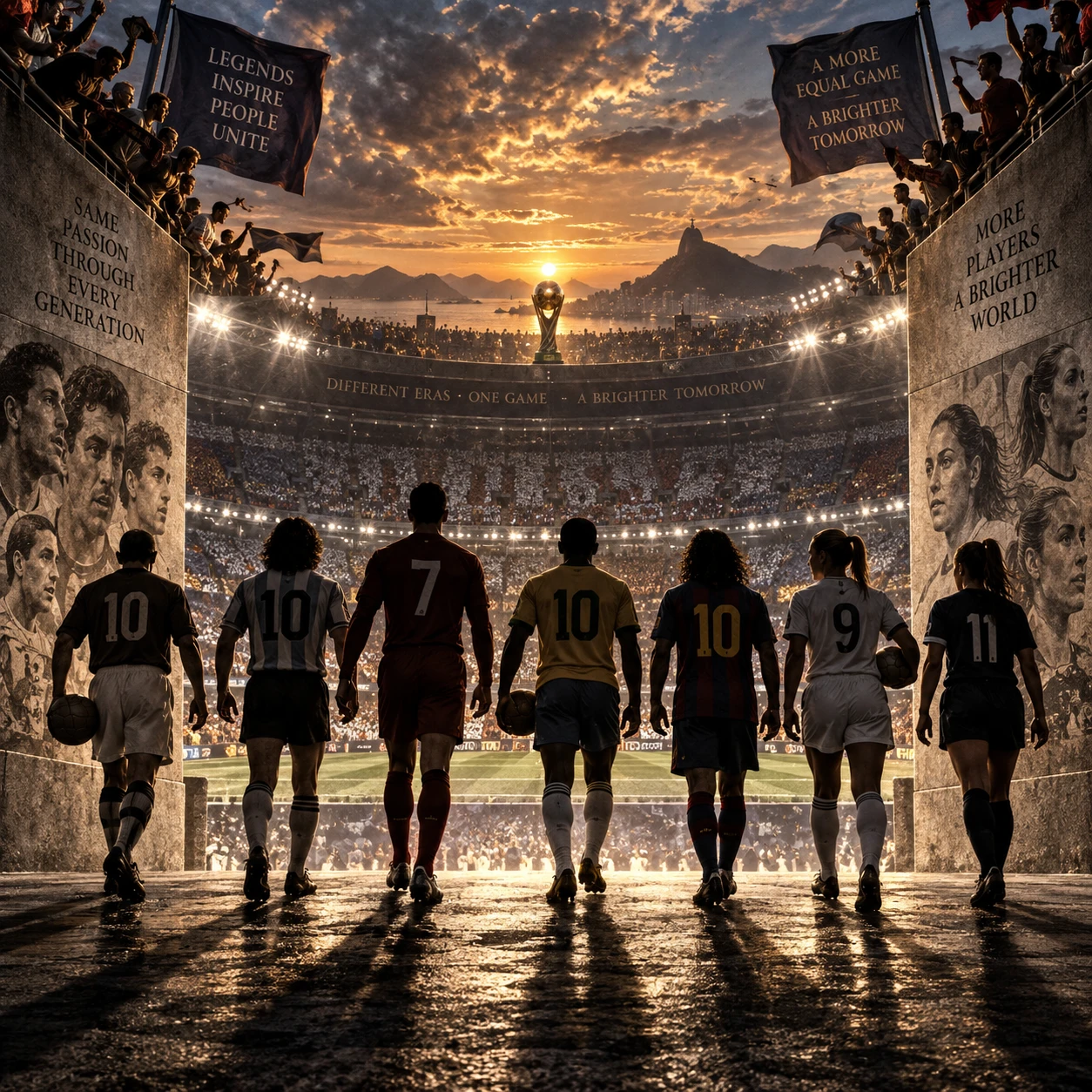
The 21st century has produced footballers who changed how the game is played, watched, and remembered. Lionel Messi and Cristiano Ronaldo set extraordinary standards for longevity and goals, while Zinedine Zidane, Ronaldinho, Andrés Iniesta, Xavi, Thierry Henry, and Marta left distinct marks on club and international football.
There is no single definitive list of the era’s greatest players. A fair assessment considers sustained excellence, major achievements, influence on tactics and culture, and the different opportunities available across the men’s and women’s games.
What Makes a Footballer a Legend?
A footballer becomes a legend through sustained excellence, meaningful achievements, and influence that lasts beyond a single season or trophy. The strongest cases combine individual skill with a lasting contribution to teams, supporters, or the wider game.
Honors matter, but they need context. A FIFA World Cup winner has reached the summit of international football, while UEFA Champions League success reflects achievement in elite club competition. Neither trophy alone tells the full story: teammates, tactical roles, opponents, and the player’s contribution all shape its meaning.
A useful way to assess legacy is the three-part test:
- Excellence: Did the player perform at an elite level over several seasons?
- Achievement: Did they help win major club or international honors, or earn significant individual recognition?
- Influence: Did their style, leadership, or example change expectations for their position or inspire future players?
This approach avoids reducing football history to a trophy count. It also makes comparisons across positions and eras more sensible: a midfielder who controls matches and a forward who scores decisive goals contribute in different ways.
Messi and Ronaldo: Defining an Era
Lionel Messi and Cristiano Ronaldo defined an era through extraordinary scoring, consistency, and long careers at the top. Their achievements invite comparison, but their distinct skills and roles make their legacies richer than a rivalry alone.
Messi developed at Barcelona into a forward who could score, create, and dictate attacks from close control. He won multiple UEFA Champions League titles with the club and collected numerous Ballon d’Or awards. With Argentina, his career brought major international success, including the 2021 Copa América and the 2022 FIFA World Cup. That World Cup win completed a defining chapter in his national-team story.
Ronaldo built his reputation through explosive athleticism, aerial ability, movement, and relentless finishing. He became a star at Manchester United, reached new heights at Real Madrid, and later played for Juventus and other clubs. His record includes multiple UEFA Champions League titles and a European Championship with Portugal in 2016. Across different leagues, he adapted his game while remaining a prolific scorer.
The contrast is instructive. Messi often shaped attacks through dribbling and passing as well as goals; Ronaldo became renowned for varied finishing and off-ball movement. Both sustained elite performance across changing teams and tactical demands. Comparing them can illuminate football’s different routes to greatness, but it cannot settle every question about the best player.
Midfield Maestros and Game-Changers
Zinedine Zidane, Andrés Iniesta, Xavi, and Ronaldinho influenced modern football through technical control, creativity, and intelligent movement. Their legacies show how midfielders and playmakers can decide matches without relying on goal totals.
Zidane combined close control, balance, and calm decision-making in high-pressure moments. He starred for France in its 1998 FIFA World Cup victory and 2000 European Championship triumph, and won the UEFA Champions League with Real Madrid. His later success as a coach added another dimension to his football legacy, though his playing career remains defined by elegance and control.
At Barcelona and for Spain, Xavi directed possession with precise passing and constant movement to offer teammates an option. Iniesta complemented him with close control, acceleration through tight spaces, and an instinct for arriving at decisive moments. Together, they helped define Barcelona’s possession-based approach and Spain’s run of major international titles, including the 2010 World Cup. Iniesta scored the winning goal in that final.
Ronaldinho brought improvisation and joy to elite football. His flair, feints, and passing helped revive Barcelona’s fortunes in the mid-2000s, and he won the Ballon d’Or in 2005. His peak was less prolonged than those of Messi and Ronaldo, but his influence on a generation of players and fans remains unmistakable. Greatness can be sustained dominance, or a shorter spell that changes what supporters expect from the game.
Goal-Scoring Icons and Attacking Greats
Thierry Henry stands among the defining forwards of the 21st century for his pace, movement, and ability to turn chances into goals. His career also shows how an attacker can influence a team’s entire style, not just its scoring record.
Henry became an icon at Arsenal, where he used speed and intelligent runs from the left or through the center to stretch defenses. He was central to Arsenal’s 2003–04 Premier League unbeaten season and won multiple league titles with the club. He also lifted the FIFA World Cup with France in 1998 and the European Championship in 2000.
His game was a blend of acceleration and restraint. Henry could sprint behind a defensive line, but he also paused to draw defenders before releasing a teammate. That combination made him difficult to mark and helped establish the modern expectation that a forward should create as well as finish.
Other attacking greats also shaped the era, including Ronaldo Nazário, whose powerful, direct style made him one of the most feared strikers of his generation, and Luis Suárez, whose movement and competitive edge brought major success at club level. Their careers differed in length, circumstances, and trophies, but each offered a distinct model of elite center-forward play.
Legends Beyond the Men’s Game
Marta is one of the defining footballers of the 21st century and a central figure in the growth of women’s football. Her technical skill, goalscoring, and long service for Brazil made her impact visible across generations.
Known for close control, quick changes of direction, and creativity in the final third, Marta became a leading player for Brazil and at club level. She won multiple FIFA women’s world player awards and competed in several FIFA Women’s World Cups and Olympic tournaments. Brazil did not win the World Cup during her international career, a reminder that individual greatness and team titles do not always align.
Her significance reaches beyond awards. Marta helped make women’s football harder to overlook, especially in a period when players often faced less investment, visibility, and professional support than their counterparts in the men’s game. Those conditions matter when comparing records or judging a career solely by trophies.
Recognizing Marta alongside the men’s greats is not a gesture of inclusion; it reflects the quality and influence of her football. The women’s game has its own history, competitive context, and standards of achievement.
Club Success, International Glory, and Lasting Influence
Club success and international glory measure different parts of a footballer’s career. The UEFA Champions League tests players across a demanding club season, while the FIFA World Cup offers a rare chance to shape a nation’s story on the biggest international stage.
Club football gives players more time to develop partnerships and work within a consistent system. That can reveal tactical intelligence and week-to-week reliability. International tournaments are shorter and less predictable: a single injury, difficult draw, or penalty shootout can define a team’s campaign. A player’s influence may be immense even without a World Cup medal.
These legends shaped modern football in several ways. Messi and Ronaldo raised expectations for scoring longevity; Xavi and Iniesta showed how coordinated possession could control elite matches; Henry helped popularize the complete, mobile forward; Ronaldinho made flair central to the spectacle; and Marta expanded the global visibility of women’s football. Zidane’s influence spans both a distinctive playing career and major achievements as a coach.
The clearest way to compare careers is to ask what each player did best, what level they sustained, and how they changed the teams or audiences around them. Trophies provide evidence, not a final verdict. Football’s greatest careers become legendary when achievement and influence meet in a way that remains recognizable long after the final whistle.
Frequently Asked Questions
Which footballers are considered the greatest of the 21st century?
Lionel Messi and Cristiano Ronaldo are frequent choices because of their longevity, scoring, and honors. Zinedine Zidane, Ronaldinho, Andrés Iniesta, Xavi, Thierry Henry, and Marta also belong in a broad discussion of the era’s most influential players.
What achievements make a footballer a legend?
There is no single requirement. Sustained elite performances, major club or international honors, individual awards, and influence on football all help establish a legacy. Position and career context matter too.
Who had the greatest influence on modern football?
There is no objective winner. Xavi and Iniesta influenced possession-based play, Messi and Ronaldo reshaped expectations for elite attacking output, and Marta helped raise the profile of women’s football. The answer depends on what kind of influence is being measured.
How do club and international achievements compare?
Club honors reflect performance across a longer season with a consistent squad and coaching system. International achievements come in shorter tournaments, where small margins can decide outcomes. Both matter, but they measure different challenges.