The Psychology of Gaming: How Games Improve Focus and Problem-Solving
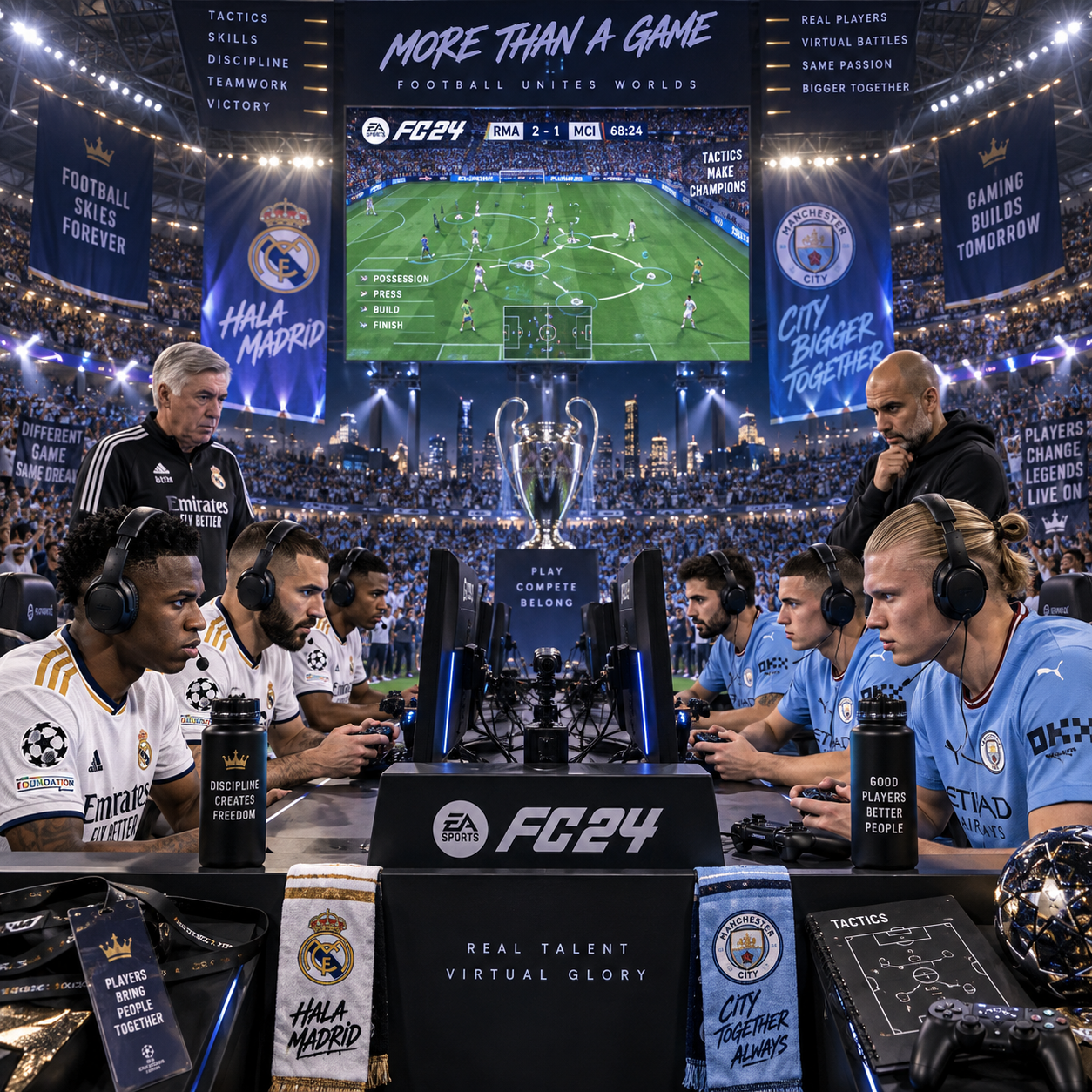
Gaming demands more than fast fingers. A competitive player must notice useful information, remember changing conditions, choose between options and respond before the situation changes again. Those demands help explain why the psychology of gaming interests football players, esports competitors and coaches.
The potential benefit depends on the type of game and the way it is played. A thoughtful session built around practice and feedback may strengthen useful habits, while passive repetition, poor sleep and endless play can undermine performance. Games can support cognitive development, but they do not replace coaching, physical training or recovery.
How Games Engage the Brain
Games engage the brain by combining clear goals, rules, feedback and increasing difficulty. This structure forces players to pay attention, process information and make decisions while conditions change.
Most competitive games create a continuous loop: observe the situation, select an action, see the result and adjust. In a football video game, that might mean identifying an opponent’s defensive shape, choosing a passing option and responding when the pass is intercepted. In an esports match, it could involve tracking resources, predicting an opponent’s movement and changing a team plan.
Game mechanics determine which mental skills receive the most work. Timers place pressure on reaction time. Limited resources encourage prioritisation. Fog of war, hidden information and changing objectives require working memory and strategic thinking. Progressively difficult opponents also prevent players from relying on one solution forever.
This is similar to a well-designed training drill: the task has a purpose, the player receives immediate information and the challenge can be adjusted. However, the mental skill developed is usually specific to the task. A player may become excellent at reading virtual space without automatically improving every form of concentration in school, work or sport.
Gaming and Focus: Training Sustained Attention
Gaming can train sustained attention by requiring players to monitor several streams of information without losing sight of the main objective. The player must filter irrelevant events, notice changes and remain engaged across an entire match or round.
Focus in gaming is active rather than passive. A football player may watch the ball, scan for a third-man run, track defensive positioning and anticipate a counterattack. An esports player may monitor a minimap, teammate communication, cooldowns, objectives and the opponent’s likely next move. Missing one important signal can change the outcome within seconds.
Good players also practise attention switching. They move from a narrow focus, such as aiming or controlling the ball, to a wider view of space and team structure. This ability matters because competition rarely rewards concentration on only one detail. The challenge is deciding what deserves attention now and what can wait.
A simple focus routine
- Set one target: choose a measurable goal, such as checking space before receiving the ball or communicating an opponent’s position.
- Remove avoidable distractions: silence unnecessary notifications and keep the session free from unrelated browsing.
- Use reset cues: after a mistake, take one breath, identify the next action and re-enter the match.
- Review attention lapses: note when concentration dropped and what triggered it.
This routine turns focus into something observable. It also prevents a common mistake: assuming that a long session automatically creates better concentration. Fatigue can reduce attention quality, even when the player remains in front of the screen.
How Games Develop Problem-Solving Skills
Games develop problem-solving by making players identify problems, test solutions and adapt when a plan fails. The strongest learning comes from deliberate decisions and useful feedback, rather than simply accumulating hours.
Consider a football game in which an opponent repeatedly attacks through the same channel. The problem is not merely losing possession. The player must determine whether the cause is poor pressing, an exposed full-back, an unsuitable formation or predictable build-up play. Several responses are possible, and each carries a cost.
Competitive games teach a practical version of hypothesis testing:
- Describe the problem precisely.
- Identify the likely cause.
- Change one part of the strategy.
- Observe what happens.
- Keep, refine or reject the adjustment.
This process builds flexible thinking. Players learn that a failed decision is information, provided they review it honestly. They also learn to distinguish a bad choice from a bad outcome. A sensible pass can be intercepted because of an opponent’s excellent read; an unsafe pass can succeed by luck. Reviewing the decision process gives better feedback than judging only the scoreboard.
Working memory plays a role as well. Players hold several possibilities in mind while acting: the opponent’s previous pattern, available resources, team positioning and the likely consequences of each option. That mental load explains why simple plans often outperform complicated ones under pressure.
Football Games and Esports Decision-Making
Football games and esports develop decision-making through positioning, timing, resource management and opponent analysis. The exact demands differ by genre, but both require players to balance immediate actions with longer-term strategy.
Football video games make tactical choices visible. Players select formations, adjust defensive depth, choose when to press and decide whether to protect a lead or continue attacking. A successful move depends on context. Pressing high may recover possession quickly, yet it can leave space behind the defensive line. Playing safely may reduce risk, but it can surrender initiative.
Esports titles often add more explicit resource management. Players may control currency, cooldowns, ammunition, map position or objective timing. Spending resources early can win a fight now while weakening the next phase. Holding them too long can waste an opportunity. These situations reward strategic thinking because the best decision is rarely the most dramatic one.
Across both settings, decision quality improves when players ask three questions:
- What information do I have? Separate confirmed facts from guesses.
- What is the opponent trying to create? Look for patterns in positioning, timing and previous choices.
- What is the risk if I am wrong? Compare the possible reward with the cost of failure.
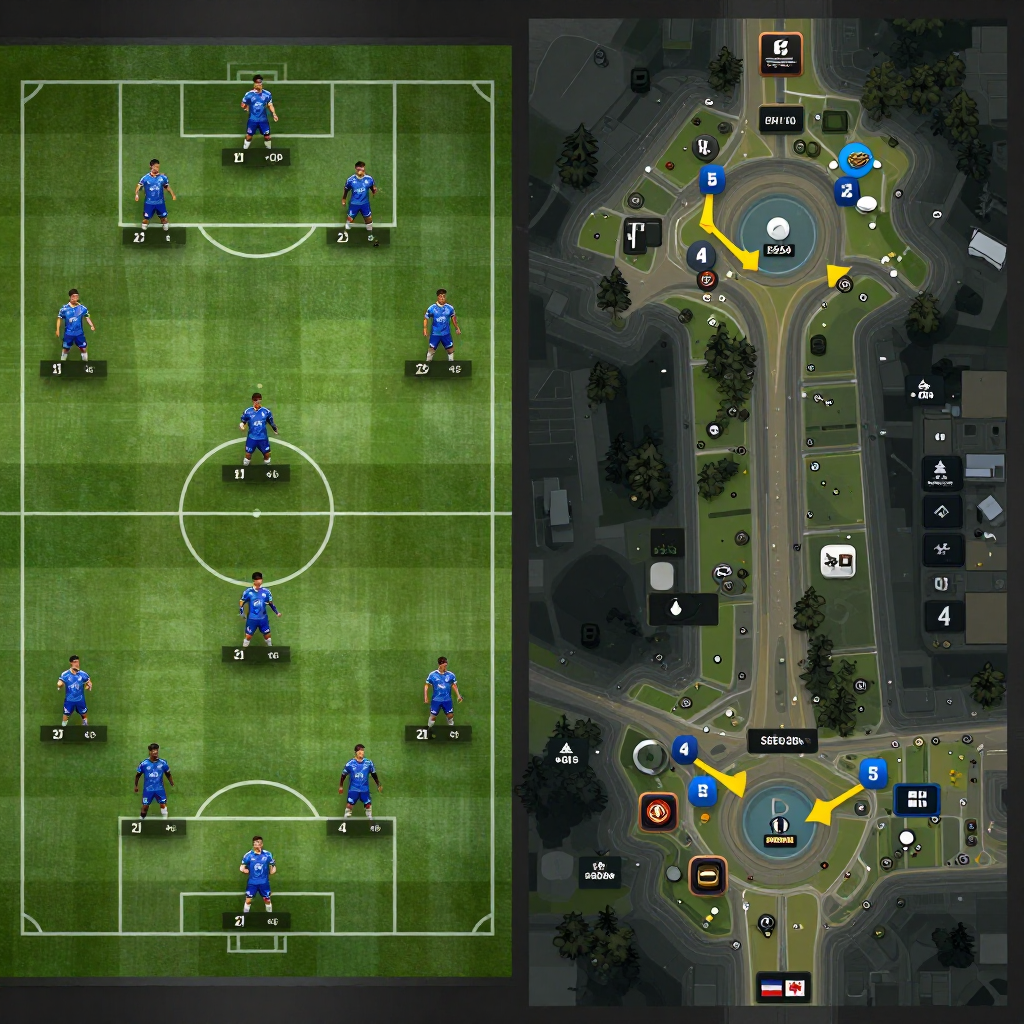
Communication adds another layer. A player who shares concise, accurate information helps teammates build a common picture of the match. That skill transfers more readily to team environments than a purely individual mechanical advantage.
From In-Game Skills to Real-World Performance
In-game skills transfer best when players deliberately connect them to real-world behaviours. Focus, anticipation, communication and tactical awareness may support football training or esports preparation, but transfer is not automatic.
A football player can use a game to rehearse questions about space: Where is the spare defender? Which passing lane is open? What happens if possession is lost? The player should then apply those questions during small-sided training, where physical movement and real pressure add information that a screen cannot reproduce.
An esports competitor can use game review to improve preparation. After a match, mark three decisions: one that worked, one that failed and one that remains uncertain. Explain the information available at each moment, then identify a repeatable cue for the next session. This is more valuable than watching highlights without analysis.
The transfer bridge
- Notice: identify the visual or tactical cue.
- Interpret: explain what the cue suggests.
- Act: choose a response under time pressure.
- Review: compare the decision with the result and the alternatives.
- Apply: practise the same principle away from the game.
For example, a player who practises scanning before receiving in a football game should add shoulder checks to a passing drill. An esports player who practises calm resets after mistakes should use the same breathing cue during tournament preparation. The game provides a controlled environment; coaching and physical practice provide the broader context.
Healthy Gaming Habits for Better Performance
Healthy gaming habits improve performance by protecting attention, physical comfort and recovery. Intentional sessions should include a clear goal, regular breaks, sleep and time away from the screen.
Session length should match the task. A focused 45-minute review can be more useful than three unfocused hours. Many players benefit from dividing practice into blocks: warm-up, targeted play, short break and review. During the break, stand up, move, drink water and let the eyes refocus.
Sleep deserves special attention because tired players often react more slowly, communicate poorly and make impulsive decisions. Gaming late into the night may create extra practice time while reducing the quality of the next day’s football or esports work. Posture, screen height and hand position also matter during long sessions, particularly for players managing neck, back or wrist discomfort.
A productive routine might look like this:
- Write one technical or tactical objective before playing.
- Play two focused blocks of 30 to 45 minutes.
- Take a five- to ten-minute movement break between blocks.
- Record two decisions to review afterward.
- Finish with physical training, stretching or recovery rather than another unplanned session.
The main trade-off is simple: more playing time can provide more repetitions, but only while attention and recovery remain adequate. Once quality falls, additional matches may reinforce rushed decisions instead of correcting them.
The Limits of Gaming as Cognitive Training
Gaming does not guarantee better focus, intelligence or athletic performance. Benefits depend on the game mechanics, the player’s habits, the training context and whether a skill transfers beyond the original task.
A strategy game may demand planning and resource management, while a fast action game may emphasise visual attention and reaction time. A football video game can support tactical discussion, yet it cannot reproduce sprinting, balance, physical contact, fatigue or the unpredictable movement of real teammates. Esports practice can sharpen communication and pattern recognition, but it still requires coaching, review and competition-specific preparation.
Three mistakes commonly weaken the expected benefit:
- Confusing play with practice: repeating matches without a goal makes improvement difficult to measure. Define one behaviour to track.
- Chasing results only: a win can hide poor decisions, while a loss can contain excellent learning. Review choices, not just outcomes.
- Ignoring recovery: exhausted players may spend more time practising while learning less. Protect sleep, movement and breaks.
The most reliable approach is to treat gaming as one training tool in a wider system. Combine it with football drills, physical conditioning, coaching, tactical review and healthy routines. Evidence summaries from organisations such as the American Psychological Association also reflect the need to consider both potential benefits and possible harms rather than treating gaming as universally positive or negative.
Frequently Asked Questions
Can gaming improve concentration?
Gaming can practise concentration when the task requires sustained attention, information filtering and fast responses. The effect is strongest when sessions are deliberate and does not automatically transfer to every setting.
Which game genres support problem-solving?
Strategy games, tactical shooters, football games and puzzle games can all support problem-solving, but they train different patterns. Strategy games emphasise planning, while football games combine positioning, timing and opponent analysis.
Do football games help with real-world football skills?
They may support tactical vocabulary, anticipation and discussion of formations, but they cannot replace physical training, technical drills or live decision-making on a pitch.
How can esports players practise focus effectively?
Set one objective, remove distractions, use short practice blocks, review key decisions and take regular movement breaks. Track attention lapses as carefully as mechanical mistakes.
How long should a gaming session last?
There is no universal ideal duration. A practical starting point is 30 to 45 minutes of focused play followed by a short break, adjusted for age, schedule, fatigue and the demands of the training goal.
Gaming is most useful when it becomes a deliberate environment for noticing, deciding, adapting and reviewing. Used alongside coaching, exercise and sleep, it can give football and esports players a sharper way to practise the mental side of competition.