The Rise of Esports: How Competitive Gaming Became a Global Phenomenon
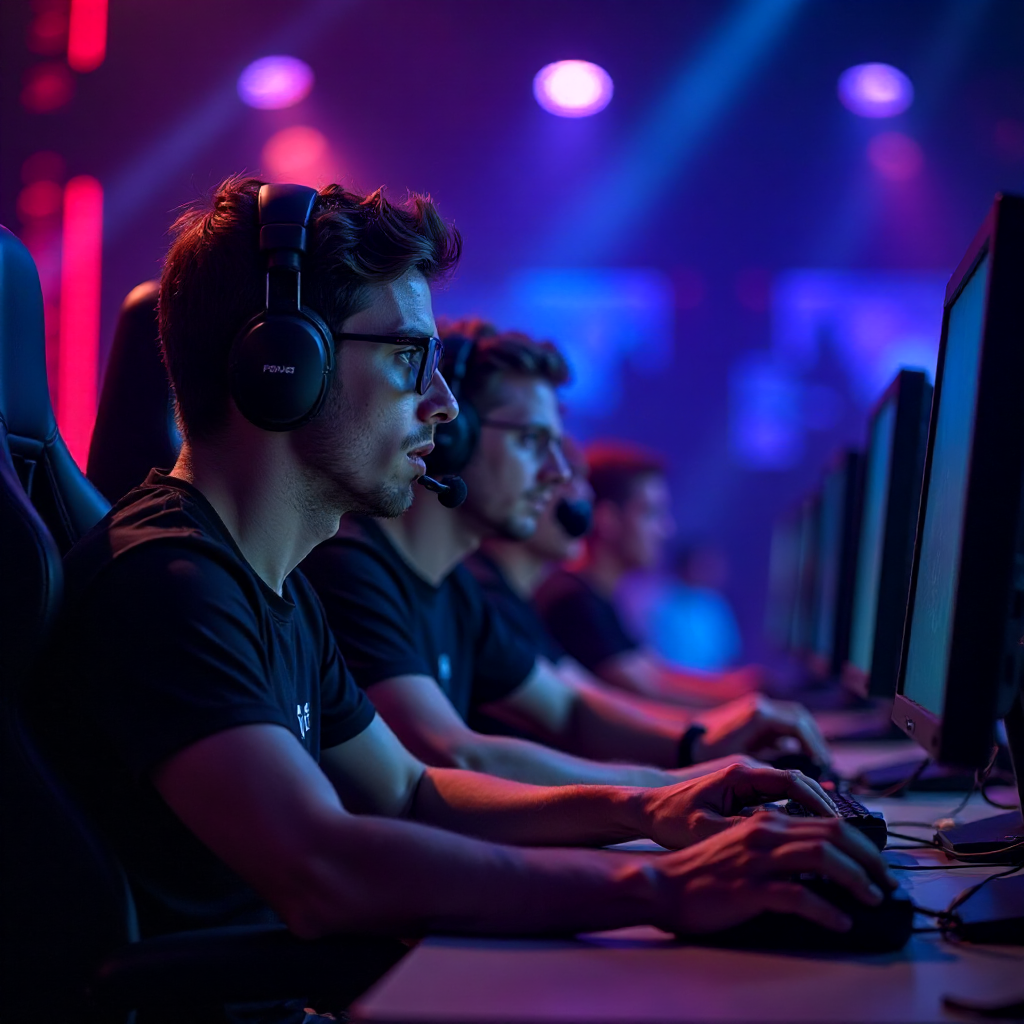
Not long ago, competitive gaming was something you did in a friend's basement or at a local arcade, with bragging rights as the only prize. Today, professional players compete in front of tens of thousands of fans in purpose-built arenas, sign multi-year contracts, and train with dedicated coaches, analysts, and psychologists. The transformation has been faster and more complete than almost anyone predicted.
From Arcade Rivalries to Global Arenas — A Brief History
Competitive gaming has roots stretching back to the early 1980s, when arcade tournaments first gave players a structured reason to compete beyond personal high scores. The real inflection point came in the late 1990s and early 2000s, when games like StarCraft in South Korea and Counter-Strike in Europe created the first genuine professional scenes — complete with team rosters, broadcast coverage, and passionate local fan bases.
South Korea's PC bang culture deserves particular credit here. The government's investment in broadband infrastructure during the late 1990s created an environment where competitive gaming could thrive at scale, and the Korean e-Sports Association (KeSPA) became one of the first official governing bodies for the sport. That institutional model — structured leagues, licensed teams, broadcast rights — would later become the template the rest of the world followed.
By the early 2010s, the rise of always-on internet connections and free-to-play games brought competitive gaming to a truly global audience. Events that once drew a few hundred spectators began filling convention halls, then arenas. The grassroots era was over; the industry era had begun.
The Games That Built the Industry
A handful of game genres gave esports its structural backbone, each attracting distinct communities and competitive formats. Understanding them helps explain why the industry grew the way it did.
MOBAs (Multiplayer Online Battle Arenas) like League of Legends and Dota 2 became the dominant genre for organized competition. The five-versus-five team format mirrors traditional team sports closely enough that fans accustomed to football or basketball can follow the strategic logic without much explanation. Dota 2's annual championship, The International, pioneered the crowd-funded prize pool model that shocked the wider sports world with its scale.
FPS (First-Person Shooter) titles — particularly Counter-Strike and later Valorant — built esports' most technically demanding competitive scene, with an emphasis on individual skill, team coordination under pressure, and split-second decision-making. The genre has produced some of competitive gaming's most celebrated professional players.
Battle royale games like Fortnite brought esports to a younger, broader demographic and introduced tournament formats built around mass participation rather than traditional league play. Fighting games — Street Fighter, Tekken, Mortal Kombat — represent perhaps the oldest competitive gaming tradition, with grassroots tournaments like EVO predating the modern esports industry by decades.
The Money Behind the Movement — Sponsorships, Prize Pools, and Franchises
The economic engine powering esports runs on three interconnected forces: brand sponsorship, franchised league structures, and prize pool investment. Together, they transformed hobby competition into a viable career path for thousands of people worldwide.
Sponsorship and brand deals were the first major commercial signal that esports had arrived. Energy drink companies came first, followed by peripheral manufacturers, then automotive brands, financial services firms, and consumer electronics giants. The demographic profile of the esports audience — young, digitally native, highly engaged — makes it genuinely attractive to brands struggling to reach that group through traditional media.
The franchised league model, borrowed directly from North American professional sports, gave investors the stability they needed to commit serious capital. Rather than promotion-and-relegation systems (where a team could theoretically lose its spot), franchise slots offer permanent or semi-permanent positions in top-tier competition. The Overwatch League and League of Legends Championship Series both adopted this structure, attracting investment from traditional sports team owners who understood the model immediately.
Prize pools grew alongside this investment. The scale of some championship prize pools — particularly in Dota 2 and CS:GO — generated mainstream headlines that introduced millions of people to competitive gaming for the first time. A player winning what amounts to a professional athlete's annual salary in a single tournament is a story that travels well beyond the gaming community.
Streaming and Content Culture: The Fuel for Esports Growth
Live streaming platforms transformed esports from a niche spectator activity into a daily entertainment habit for millions of people. Twitch, YouTube Gaming, and regional equivalents in China and South Korea gave fans a way to watch competitive play — and the personalities behind it — at any hour, from anywhere.
The relationship between streaming and esports is symbiotic in a way that traditional sports broadcasting rarely achieves. A fan can watch a major tournament broadcast on Saturday, then spend the rest of the week watching their favorite professional player stream their practice sessions, interact with the community, and break down strategy in real time. That level of access creates a depth of connection that TV sports struggle to replicate.
Content creators who aren't competing professionally also play a significant role. Streamers and YouTubers who cover esports titles expand the audience by bringing in casual players who may not follow competitive scenes directly. They act as a discovery layer — someone who starts watching a streamer for entertainment often ends up following the professional scene they discuss.
Esports Meets Traditional Sports — An Unlikely Crossover
The boundary between esports and traditional sports has blurred considerably over the past decade, with football clubs, NBA franchises, and Formula 1 teams all staking out positions in the competitive gaming world.
Several major European football clubs — including Paris Saint-Germain, Manchester City, and FC Barcelona — have established dedicated esports divisions, primarily competing in FIFA (now EA Sports FC) tournaments. The logic is straightforward: these clubs already have global brand recognition and passionate young fan bases, and esports offers a way to deepen engagement with supporters who may never attend a live match but spend hours playing football simulation games.
The crossover runs in both directions. Traditional sports broadcasters have acquired esports broadcast rights. Stadium operators have hosted major esports championships. Some venues originally built for concerts or conventional sports have invested in permanent esports infrastructure — high-speed networking, broadcast-quality production setups, dedicated gaming arenas.
For football fans new to esports, the structural parallels are actually quite intuitive. Team dynamics, tactical preparation, the pressure of knockout competition, passionate supporter communities — these elements translate almost directly. The main adjustment is accepting that the "pitch" is a screen and the "ball" is controlled by a mouse or keyboard.
The Global Esports Audience — Who Is Watching and Why
The esports audience is genuinely global, with significant viewership concentrated in East and Southeast Asia, North America, and Europe, and fast-growing communities across Latin America, the Middle East, and Africa. Each region has its own dominant titles, homegrown stars, and local competitive ecosystems.
What unites esports fans across regions is a combination of factors that will feel familiar to any traditional sports supporter: loyalty to specific teams and players, the emotional investment of following a competitive season, the social experience of watching with others, and the satisfaction of understanding something complex well enough to appreciate the skill on display.
The community culture around esports is notably participatory. Fans don't just watch — they discuss strategy, create content, follow player social media, and often play the games themselves at an amateur level. That dual identity as both spectator and participant gives esports communities a different texture from most traditional sports fan bases.
What's Next for Competitive Gaming?
The trajectory of esports points toward broader reach, deeper integration with mainstream sports infrastructure, and new competitive formats built around mobile platforms.
Mobile esports is the most significant growth frontier. In markets across Southeast Asia, South Asia, and Africa, mobile gaming is the primary gaming platform — not PC or console. Games like PUBG Mobile and Mobile Legends: Bang Bang already run major international tournaments with substantial prize pools and viewership numbers that rival PC esports events in their regions.
Collegiate esports programs have expanded rapidly, with universities across North America, Europe, and Asia offering scholarships and varsity-level competition. This legitimizes competitive gaming as a career pathway in the eyes of parents and educational institutions — a cultural shift with long-term implications for how society categorizes the activity.
Olympic inclusion remains a live debate. The International Olympic Committee has run esports demonstration events and established an Olympic Esports Series, signaling genuine institutional interest. Whether competitive gaming earns full Olympic status depends partly on questions about game content and partly on how the IOC navigates relationships with game publishers who control the intellectual property at the center of every competition.
Whatever the outcome of those specific debates, competitive gaming's place in global entertainment culture is no longer provisional. It earned that position the same way traditional sports did — through compelling competition, passionate communities, and the simple human pleasure of watching someone do something extraordinarily well.
Frequently Asked Questions About Esports
What exactly counts as an esport?
An esport is any video game played competitively in an organized format with defined rules, structured brackets or leagues, and players competing for prizes, rankings, or titles. The term covers everything from real-time strategy games to sports simulations to first-person shooters — the common thread is organized, skill-based competition rather than casual play.
How do professional esports players get paid?
Professional players typically earn through a combination of base salary from their team organization, a share of prize pool earnings from tournament results, personal sponsorship deals, and streaming or content revenue. Top-tier players at major organizations can earn salaries comparable to mid-level professional athletes in traditional sports, though income varies enormously by game, region, and competitive level.
Is esports considered a real sport?
This depends on your definition of "sport." Esports requires intensive training, strategic preparation, mental resilience under pressure, and team coordination — qualities shared with recognized sports. Many countries have granted professional esports players athlete visas, and several national Olympic committees have formally recognized esports. The debate is largely semantic; the competitive and professional structures are real regardless of how you classify them.
Which esports tournaments attract the largest audiences?
The League of Legends World Championship, Dota 2's The International, and major CS:GO/CS2 Majors consistently rank among the most-watched esports events globally. In Asia, Honor of Kings and PUBG Mobile tournaments draw enormous regional audiences. Each game has its own championship circuit, so "largest" depends partly on whether you're measuring peak concurrent viewers, total hours watched, or live attendance.
How can a beginner start following esports?
The easiest entry point is picking a game you already play or find interesting and watching its top-level competitive broadcasts on Twitch or YouTube. Most major tournaments are free to watch live. Following a few professional players on social media helps build familiarity with the personalities involved. Subreddits and Discord communities for specific games are welcoming to newcomers and useful for learning the competitive context quickly.